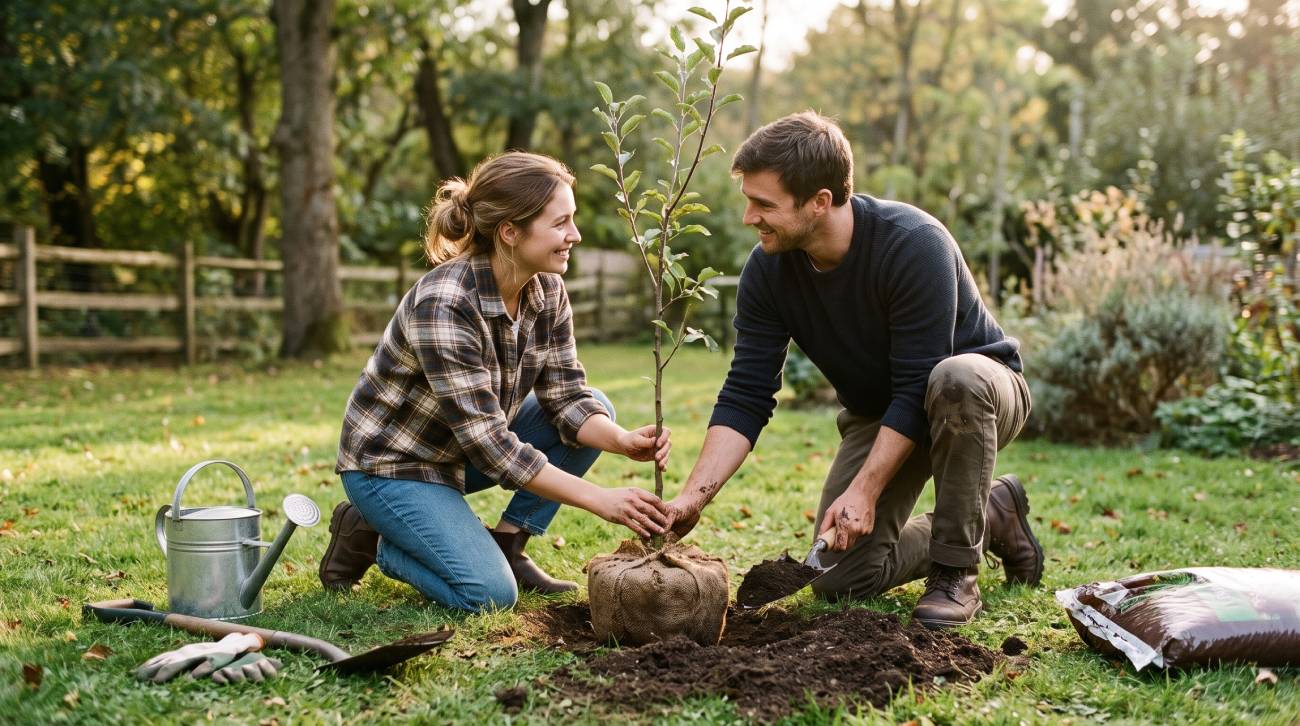
Putting Down Roots: Why Planting a Tree Together Can Strengthen a Relationship
Strong relationships are rarely built on grand gestures alone. They’re built on the small things couples do again and again: the morning coffee made for two, the Sunday walk, the inside joke that never gets old. Over time, those habits become a kind of quiet language that says, “We’re in this together.”
Some couples look for a way to make that language visible. They want a symbol of their commitment that isn’t a piece of jewelry or a photo on the wall, something that grows and changes the way their relationship does. More and more of them are choosing to plant a tree. It’s a simple act, but it carries a surprising amount of meaning, and it can become one of the most rewarding traditions a couple or family shares.
The Power of Shared Rituals
People who study relationships often talk about rituals of connection. These are repeated, intentional moments that remind two people they’re a team. A ritual can be as small as a goodnight text or as elaborate as an annual trip to the place where you met. What makes it powerful isn’t the size of the gesture but the fact that it keeps happening, and that both people care about it.
The Greater Good Science Center at UC Berkeley publishes accessible research on how gratitude, shared experiences, and meaningful routines help relationships thrive. A common thread runs through much of that work: couples who deliberately create moments of meaning together tend to feel closer and handle conflict better. Rituals give a relationship rhythm. They also give children in the household a sense of stability, because they can count on certain things happening at certain times.
Why a Tree Makes Such a Meaningful Symbol
A tree is an almost perfect metaphor for a lasting relationship, and the best part is that the comparison doesn’t feel forced. A young tree needs attention in its first few years. It has to be watered, protected, and given room to grow. It faces storms and droughts, and the ones that survive usually grow stronger roots because of them. Most of what keeps a tree standing happens underground, out of sight, much like the trust and respect that hold a couple together.
A tree is also a living record. Couples who plant one often find themselves measuring it, photographing it, and noticing how much it has changed since that first afternoon with a shovel. Looking at it ten years later, you’re reminded not only of where you started but of everything you’ve weathered since.
Moments Worth Marking With a Tree
Almost any milestone can be honored with a tree. The species you choose can add another layer of meaning, though it’s always wise to pick something native or well adapted to your local climate.
| Occasion | Tree idea | Why it fits |
|---|---|---|
| Moving into your first home together | A shade tree like red maple or oak | It grows along with the household and one day shades the porch |
| Wedding or commitment ceremony | A long-lived species such as oak or ginkgo | Built to last for generations |
| Anniversary | A flowering tree like dogwood or redbud | Its blooms return every spring as a yearly reminder |
| Birth or adoption of a child | A fruit tree such as apple or pear | The child and the tree grow up side by side |
| A fresh start after a hard season | A hardy native tree | A quiet statement about resilience and choosing each other again |
| Remembering a loved one | A tree that person loved | A living tribute the whole family can visit |
There’s no wrong occasion. Some couples plant a tree simply because it’s spring, they’re happy, and they want something to show for it. That’s a perfectly good reason, too.
How to Plant It So It Actually Thrives
A ritual tree that withers in two years makes for a sad metaphor, so a little practical knowledge goes a long way. Most young trees that fail do so because of how or where they were planted, not because of bad luck.
- Pick the right tree for the spot. Check its mature height and width, how much sun it needs, and how close it will be to the house, the driveway, and overhead lines.
- Plant in the right season. In much of the country, fall and early spring give roots time to settle in before summer heat arrives.
- Call 811 before you dig. This free service in the United States marks buried utility lines so your romantic afternoon doesn’t end with a cut gas line.
- Dig wide, not deep. The hole should be two to three times as wide as the root ball, with the flare at the base of the trunk sitting at or just above the soil line.
- Mulch like a donut, not a volcano. Spread mulch two to four inches deep in a wide ring, keeping it a few inches away from the trunk itself.
- Water deeply and regularly. The first two years are the most fragile, so a consistent watering routine matters more than anything else.
The International Society of Arboriculture’s TreesAreGood.org has clear, step-by-step planting guides. Once the tree is in the ground, the care articles on puravidatreeservice.com are useful for the years that follow, from spotting early signs of stress to understanding when and how young trees should be pruned so they grow into a strong shape.
Turning Planting Day Into a Tradition
Planting the tree is only the beginning. The real magic comes from returning to it, year after year, and letting it become part of the story you tell about yourselves.
- Take a photo of the two of you beside the tree on the same date every year.
- Keep a small shared journal where you each write a few lines about the past year whenever you visit.
- Celebrate the first blossoms, the first fall color, or the first fruit as small family holidays.
- Let children take over watering and mulching duties as they get older, so the tree becomes theirs too.
- Add a new tree for each major milestone, until one tree slowly becomes a small grove.
Over time, these little habits turn a single afternoon of digging into something much bigger. The tree becomes a gathering place, a backdrop for photos, and a reminder of promises made.
What Caring for a Tree Teaches Couples
Looking after a tree has a way of reinforcing the same habits that keep relationships healthy. Patience is the first. You can’t rush a sapling into a shade tree any more than you can rush trust. Consistency is another. A tree does better with steady, ordinary care than with an occasional burst of attention, and the same is true of a partner who feels noticed every day rather than only on anniversaries.
Trees also teach you to adapt to seasons. There are years of fast growth and years where the tree seems to do nothing at all, when in fact it’s building roots. Couples go through those phases too, and recognizing them can make the slow years feel less worrying.
Perhaps the most useful lesson is knowing when to ask for help. If a tree shows signs of disease or storm damage, the smart move is to call someone who knows trees, not to hope it sorts itself out. Relationships are no different. Reaching out to a counselor or a trusted mentor during a difficult stretch isn’t a sign that something has failed. It’s a sign that both people care enough to protect what they’ve grown.
There’s something deeply hopeful about planting a tree with someone you love. You’re investing in a future you can’t fully see, trusting that the work you put in now will pay off in shade, blossoms, and beauty years down the road. That’s not so different from what any committed couple does every day. A tree simply makes that faith visible, standing in the yard as a quiet reminder that the best things in life take time, care, and two people willing to keep showing up for each other.
Conclusion
Planting a tree together is a small afternoon project with a very long reach. It gives couples and families a shared ritual, a living symbol of their commitment, and a reason to pause each year and notice how far they’ve come. Choose the right tree, plant it with care, and keep coming back to it. One day you may find yourselves sitting in its shade, remembering the muddy shoes and the crooked first stake, and realizing that you grew a lot more than a tree.